

Stake Originals
Stake OriginalStake Slide: Target, Shared Round and Multiplier
Guide to Stake Slide: target multiplier, shared result, history, Manual and Auto modes, payout and provably fair.
Published by The Gambling Desk ·
Stake Slide asks players to set a multiplier before a shared round. A series of cards scrolls beneath a central indicator. If the final result reaches or exceeds the target, the bet is paid at the selected multiplier.
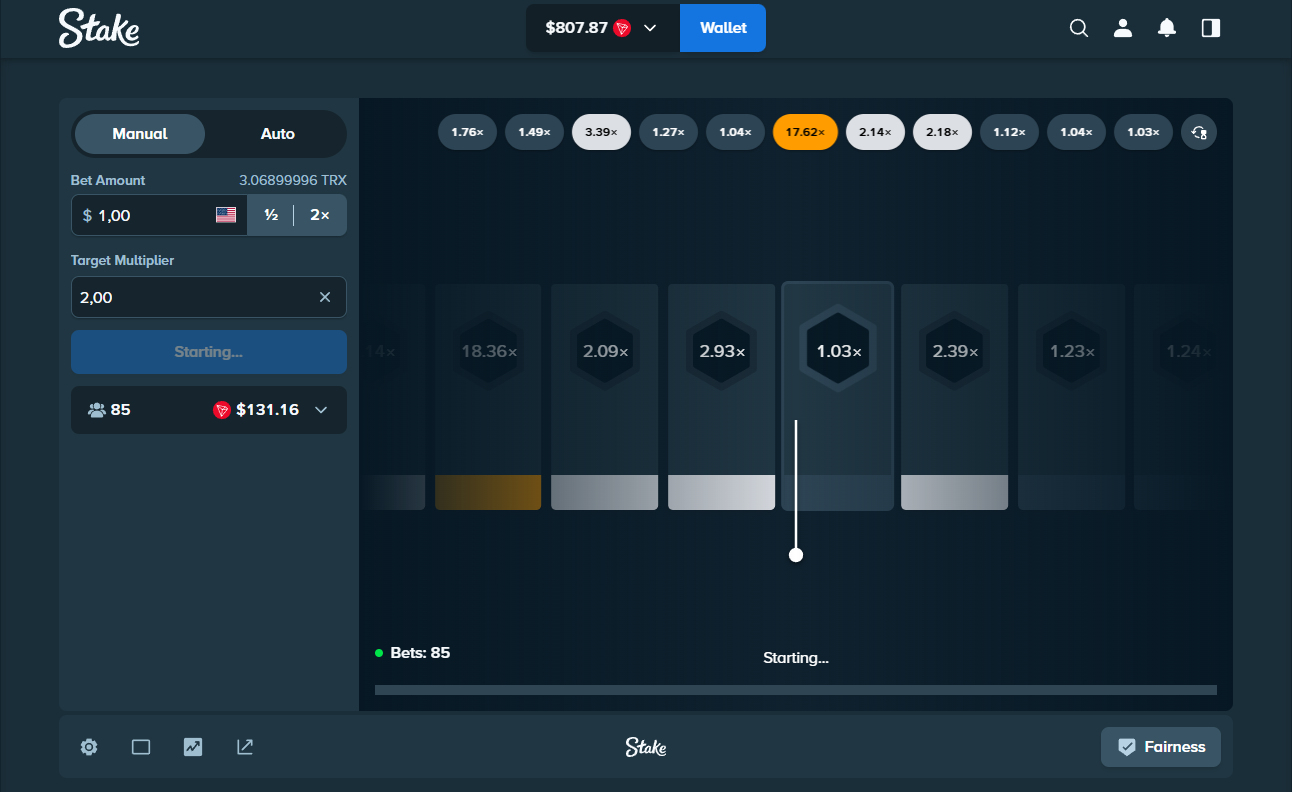
The screenshot shows a 2.00x target, 85 bets associated with the round and a result in the process of stopping at 1.03x. Such a value would remain below the target and would not produce a payout.
How a Round Works
- Set the Bet Amount.
- Enter the Target Multiplier.
- Confirm the bet before the round begins.
- The multiplier carousel scrolls.
- The indicator designates the final value.
- The target is paid only if that value is reached or exceeded.
The final multiplier is shared by the round. Players can select different targets, but they observe the same result.
Understanding the Slide Interface
Manual and Auto appear at the top of the left-hand panel. The bet shortcuts divide or double the amount. Target Multiplier contains the selected target.
Under Bet, the screenshot shows 85 participants and total bets of 131.16. These values describe only the captured round. They do not change an individual's probability.
The upper row retains the latest results: 1.76x, 1.49x, 3.39x, 1.27x, 1.04x, 17.62x and other values. This history cannot predict the next card.
Inside the Stake interface
Stake Original Slide in pictures

Target and the Probability Trade-Off
The DOCX indicates a minimum target of 1.01x. The higher the target, the further the result must go to produce a win.
A low target pays less when successful; a high target fails more often. A win at 1.01x represents net profit of only 1% of the bet. The very high ceiling mentioned in the legacy document is not retained as a current feature without independent canonical confirmation.
Shared Result and History
The number of players or the visible total amount does not improve the result. Slide does not divide a pot among participants: each bet is assessed against its own target.
A long series of values close to 1x does not make a high value “due”. The history serves only to review completed rounds.
Manual and Auto Modes
Manual lets you review the target before every bet. Auto repeats the amount and target according to the selected settings. The DOCX mentions profit and loss limits; their detailed settings are not visible in the screenshot.
Before using Auto, calculate the total exposure and define a stopping point. Changing the bet after a loss does not alter the next shared result.
Slide and Provably Fair
Fairness opens the round's provably fair information. The server seed, client seed and nonce allow retrospective verification.
See our Stake provably fair guide. Drill compares a target against three drills, while Crash offers another multiplier mechanic.
Frequently Asked Questions
Is the Result the Same for Every Player?
The screenshot shows a shared round with several bets. Each player selects a target, but the round's final result is shared.
What Happens If the Value Equals the Target?
The DOCX states that the target must be reached or exceeded; equality therefore wins.
Does the History Help You Choose a Target?
No. It shows past rounds and does not predict the next result.